
Table of Contents
Introduction: Understanding the 08 Financial Crisis
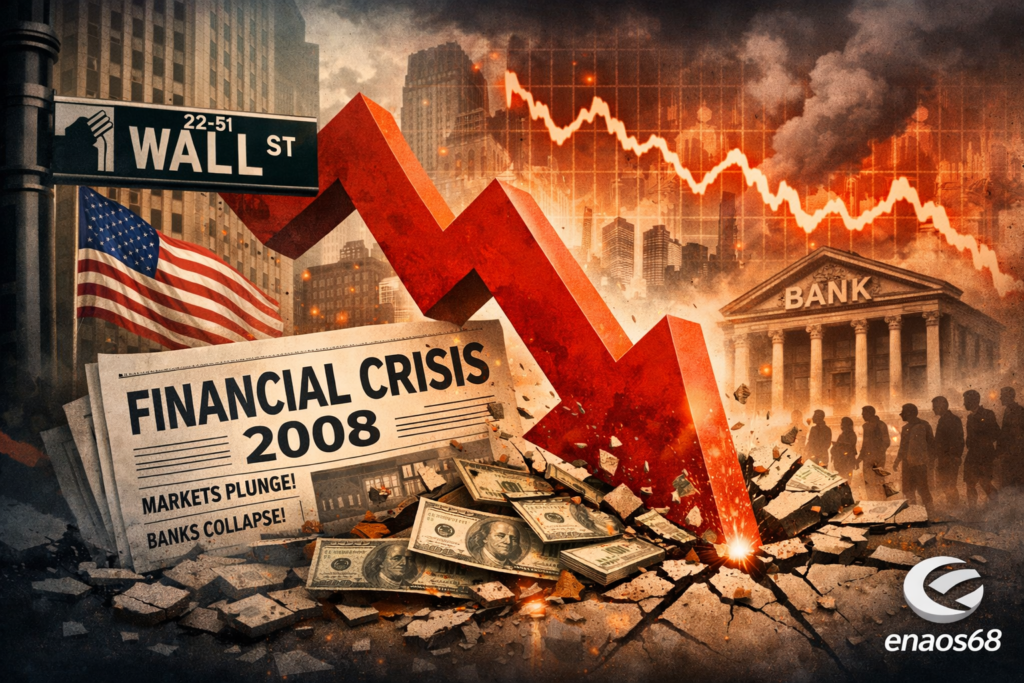
The 08 financial crisis, also known as the 2008 financial crisis or the global financial crisis, was one of the worst economic disasters in modern history. It started in the United States but quickly spread across the world, affecting banks, businesses, governments, and ordinary families. Millions of people lost their jobs, homes, and savings. Big financial institutions collapsed, stock markets crashed, and trust in the banking system was deeply shaken. To understand the 08 financial crisis in simple words, it was a situation where banks gave too many risky loans, especially home loans, and when borrowers could not repay them, the entire financial system began to break down. This crisis officially exploded in 2008, but its roots were building for many years before that. It changed global finance forever and forced governments to rethink how banks should operate.
The financial crisis of 2008 is important because it showed how connected the global economy really is. A problem that began with housing loans in America turned into a worldwide recession. According to the International Monetary Fund (IMF), global economic growth dropped sharply in 2009, and world trade fell dramatically. In the United States alone, unemployment reached around 10% in 2009, and millions of homes were foreclosed. The 08 financial crisis also led to massive government rescue programs, including bank bailouts and emergency stimulus packages. Many experts describe it as the biggest financial shock since the Great Depression of the 1930s. Even today, economists, investors, and policymakers study the 2008 financial crisis to understand how such a disaster happened and how to prevent another one in the future.
What Caused the 08 Financial Crisis?
The main causes of the 08 financial crisis were deeply connected to the housing market, risky lending practices, and weak financial regulation. In the early 2000s, banks and lenders started giving home loans to people who had low income or poor credit history, and these loans were called subprime mortgages. At that time, home prices were rising quickly, and many people believed that property values would never fall. Because of this belief, banks felt safe lending money even to risky borrowers. Financial institutions then packaged these home loans into complex financial products and sold them to investors around the world. These products looked safe on paper because credit rating agencies often gave them high ratings, but in reality they were built on unstable loans. When interest rates later increased and borrowers could not repay their mortgages, home prices began to fall, and the entire structure started collapsing. What made the 2008 financial crisis worse was the heavy use of borrowing by banks themselves, meaning they were operating with very little real money and too much debt, so even small losses became deadly.
Another major reason behind the global financial crisis was the lack of proper oversight and regulation. For many years before the crisis, financial markets were allowed to grow with limited government control. Large banks became extremely powerful and interconnected, creating a system where the failure of one institution could threaten the entire economy. This idea later became known as “too big to fail,” meaning some banks were so large that governments felt forced to rescue them to avoid total collapse. Low interest rates after the 2001 recession also encouraged excessive borrowing and risk-taking. Investors were searching for higher returns, and risky mortgage-based investments seemed attractive. At the same time, many ordinary people were buying homes not just to live in, but to quickly sell for profit, which created a housing bubble. When the bubble burst, confidence in banks disappeared, credit markets froze, and fear spread across global financial systems. The financial crisis of 2008 was therefore not caused by one single mistake, but by a chain of risky decisions, poor judgment, and weak supervision that built up over time and finally exploded.
Timeline of the 2008 Financial Crisis
The 08 financial crisis unfolded over several years, with warning signs appearing as early as 2006 when the housing market began to show cracks. Home prices in the United States, which had been rising rapidly for years, started to decline, and mortgage defaults, particularly among subprime borrowers, began to increase. By 2007, major financial institutions were already feeling the pressure as mortgage-backed securities and complex investment products began to lose value. Investors started to panic, and banks became hesitant to lend to each other, creating a credit crunch that slowed down the economy. The failure of Bear Stearns in March 2008, which was sold in a fire sale to prevent a collapse, marked one of the first major signs that the financial system was in deep trouble. This period saw banks struggling to stay solvent, investment firms collapsing under losses, and governments starting to step in to prevent further disaster, but the situation only intensified as the year progressed.
The crisis reached its peak in September 2008, when Lehman Brothers, a major investment bank, declared bankruptcy, shocking the world and sending financial markets into freefall. The collapse triggered a global panic as banks and investors realized the scale of exposure to toxic mortgages and risky financial products. Almost simultaneously, insurance giant AIG needed a government bailout to survive, and Fannie Mae and Freddie Mac were placed under conservatorship to stabilize the housing market. Stock markets around the world plunged, wiping out trillions of dollars in wealth, and credit markets froze as banks feared lending to one another. Governments quickly responded with massive bailout packages and emergency stimulus measures, including the Troubled Asset Relief Program (TARP) in the United States, which aimed to restore confidence and liquidity in the financial system. By the end of 2008, the world had entered the deepest recession since the Great Depression, with unemployment rising, businesses failing, and ordinary people facing devastating financial losses, marking the 08 financial crisis as a turning point in modern economic history.
How the Global Financial Crisis Spread Worldwide
The 08 financial crisis quickly moved beyond the United States because the world’s financial systems had become deeply interconnected. Banks and investment firms across Europe, Asia, and other regions had invested heavily in American mortgage-backed securities and related financial products, many of which turned out to be nearly worthless when the housing market collapsed. As U.S. banks began to fail or require government bailouts, confidence in the global banking system dropped sharply, and lending between countries and institutions froze. Countries with strong trade links to the United States, as well as those with highly integrated financial markets, felt the shock almost immediately. Stock markets worldwide plunged, and economies that relied on exports or foreign investment were hit hard. Nations like Iceland saw their entire banking system collapse, while countries such as the United Kingdom and Germany faced severe banking crises, forcing governments to intervene with emergency funds to prevent complete financial meltdown. The ripple effects even reached developing nations, where falling demand for exports and tightened credit led to economic slowdowns and rising unemployment.
The worldwide spread of the 2008 financial crisis highlighted how no economy could remain insulated in a globally connected financial system. Central banks and governments were forced to coordinate responses to stabilize markets, including slashing interest rates, providing emergency liquidity, and implementing stimulus programs. International organizations such as the International Monetary Fund (IMF) and the World Bank played a crucial role in helping countries manage the economic fallout and prevent a total collapse of global trade. Businesses around the world faced declining revenues, layoffs increased, and consumer confidence dropped dramatically, leading to a severe contraction in economic activity. The crisis also exposed weaknesses in financial regulation across countries, demonstrating that risky financial practices and over-leveraging were not limited to the U.S., but were part of a systemic global problem. By the time the dust began to settle, the 08 financial crisis had reshaped global financial policies and forced nations to rethink how to prevent such a catastrophe from occurring again.
Economic and Social Impact of the 08 Financial Crisis
The economic and social impact of the 08 financial crisis was profound and felt by millions of people around the world. In the United States, unemployment surged as companies cut jobs to survive the sudden downturn, with millions of workers losing their livelihoods in industries ranging from finance and construction to manufacturing and retail. Many families faced foreclosure as home values plummeted and mortgage payments became unmanageable, wiping out years of savings and equity. The stock market collapse destroyed personal investments, retirement accounts, and wealth for ordinary citizens, creating widespread fear and uncertainty about the future. Globally, countries experienced shrinking economies as trade slowed and investments dwindled, causing recessions in Europe, Asia, and emerging markets. Governments struggled to maintain social programs, and the strain on public finances increased as unemployment benefits and social welfare demands rose sharply. The 08 financial crisis exposed how vulnerable everyday people are to systemic financial failures and highlighted the importance of sound economic policies and consumer protections.
Socially, the crisis led to long-term consequences that extended far beyond financial losses. Families faced stress, mental health challenges, and disruptions in education and healthcare due to economic hardship. Young people entering the job market during the recession often found limited opportunities, affecting career growth for years. Communities dependent on industries like construction and manufacturing experienced significant decline, leading to social unrest in some areas and widening the gap between wealthy and poor populations. The crisis also changed attitudes toward money, credit, and financial institutions, with many people becoming more cautious about borrowing, investing, or trusting banks. Globally, governments and citizens began to recognize the interconnectedness of economies, understanding that problems in one country could quickly affect millions worldwide. Overall, the economic and social consequences of the 08 financial crisis were long-lasting, shaping policies, financial practices, and public awareness for decades to come.
Government Bailouts and Financial Reforms After 2008
In response to the 08 financial crisis, governments around the world took unprecedented measures to stabilize economies and prevent the collapse of major financial institutions. In the United States, the government introduced the Troubled Asset Relief Program (TARP), which provided hundreds of billions of dollars to rescue banks and financial institutions facing insolvency. The Federal Reserve also took extraordinary steps, including lowering interest rates to near zero and implementing quantitative easing programs to inject liquidity into the markets. These interventions helped restore confidence in the financial system, prevented a total collapse of banks, and supported the resumption of lending, which was crucial for economic recovery. Meanwhile, European countries faced similar challenges, with governments stepping in to rescue struggling banks and implement stimulus measures to protect jobs and prevent recessions from worsening. Central banks coordinated their efforts globally, recognizing that the financial crisis was not confined to one country, and that the survival of the banking system depended on swift and decisive action.
Alongside immediate bailouts, the crisis prompted widespread financial reforms designed to prevent a repeat of the 2008 disaster. In the United States, the Dodd-Frank Wall Street Reform and Consumer Protection Act was passed in 2010 to increase oversight of banks, enforce stricter capital requirements, and protect consumers from abusive lending practices. Internationally, the Basel III framework was introduced to strengthen banking regulations, requiring higher capital reserves and better risk management to ensure banks could withstand future shocks. Governments also implemented stress tests to assess the health of financial institutions and improve transparency in the markets. These reforms reshaped global banking, limiting excessive risk-taking and encouraging more responsible lending and investment practices. While no system can be entirely risk-free, the measures taken after the 08 financial crisis created a stronger safety net for economies and reinforced the importance of monitoring financial institutions to maintain stability and protect ordinary citizens from the fallout of future crises.
Frequently Asked Questions About the Financial Crisis of 2008
Many people often wonder whether the 08 financial crisis could happen again and who was actually responsible for the disaster. The truth is that while the exact conditions of 2008 are unlikely to repeat, some of the same risks still exist in global finance today, such as excessive borrowing, complex financial products, and interconnected banking systems. Responsibility for the crisis was shared among multiple parties, including banks that issued risky loans, investors who bought and traded dangerous financial products, credit rating agencies that misjudged the risk, and government policies that encouraged homeownership without sufficient safeguards. Ordinary people also contributed in small ways by taking on loans they could not fully afford, but the major failures were systemic, reflecting the weaknesses of the financial system as a whole. The lessons learned from the crisis continue to influence financial policy, regulation, and personal financial behavior, reminding both governments and citizens of the importance of vigilance, transparency, and caution in economic decision-making.
Another common question is whether anyone went to jail as a result of the 08 financial crisis, and the answer is that very few individuals faced criminal penalties despite the massive financial damage. Most legal actions were civil lawsuits or fines against banks and institutions rather than criminal convictions. This lack of accountability caused public frustration and fueled debates about ethics and responsibility in the financial industry. The crisis also raised questions about how to prevent future collapses, emphasizing the need for stricter oversight, better risk management, and global coordination among financial authorities. It showed that economies are deeply interconnected, and a problem in one sector or country can quickly spread worldwide, affecting millions of people. The widespread attention and ongoing analysis of the 2008 financial crisis ensure that the causes, consequences, and preventive measures remain important topics for policymakers, educators, and anyone interested in understanding the dynamics of modern financial systems.
Lessons Learned From the 08 Financial Crisis
The 08 financial crisis taught the world many important lessons about economics, finance, and human behavior. One of the most significant lessons is the danger of excessive risk-taking and over-leveraging, where banks and investors borrow too much money relative to their actual assets. The crisis showed that complex financial products, even if they seem safe on paper, can create hidden dangers that threaten the entire financial system. It also highlighted the importance of transparency in banking and investment practices, as the lack of clear information about mortgage-backed securities and other derivatives made it nearly impossible for investors and regulators to understand the true level of risk. Governments and financial institutions learned that proactive oversight and regulation are crucial to prevent bubbles from forming and to protect ordinary people from losing their savings, homes, and jobs. Economists often point out that understanding human behavior, including greed, fear, and herd mentality, is just as important as understanding financial models, because these behaviors can amplify problems and accelerate crises.
Another key lesson from the financial crisis of 2008 is the necessity of global cooperation during economic emergencies. Since the crisis spread across countries so rapidly, no nation could fully protect itself alone. International coordination between central banks, governments, and organizations like the IMF was essential to stabilize markets and restore confidence. The crisis also forced policymakers to reconsider long-term economic strategies, including how to manage housing markets, regulate financial institutions, and support economic growth without encouraging reckless lending. For ordinary people, the 08 financial crisis emphasized the importance of financial literacy, saving, and cautious borrowing, as personal decisions can either protect or expose individuals to systemic risks. In the years following the crisis, reforms like stricter banking regulations, stress tests, and consumer protections were introduced to build a stronger financial system, demonstrating that the lessons of 2008 are still shaping economic policies and financial practices today.
Conclusion: Why the 08 Financial Crisis Still Matters
The 08 financial crisis remains one of the most important economic events of the 21st century because of its lasting impact on governments, financial systems, businesses, and ordinary people. It exposed the vulnerabilities in modern banking, the dangers of excessive risk-taking, and the global interconnectedness of economies. Millions of people lost jobs, homes, and savings, and many businesses failed, showing how quickly a financial problem in one sector can ripple through the entire economy. Governments were forced to act with unprecedented bailouts and stimulus programs, and new regulations were introduced to prevent similar crises in the future. The lessons learned from the 2008 financial crisis continue to influence economic policies, financial education, and regulatory practices around the world. Economists, policymakers, and financial institutions constantly study this period to better understand market risks, human behavior, and the importance of strong oversight.
Even years later, the 08 financial crisis serves as a reminder of the fragility of financial systems and the importance of being prepared for economic shocks. It highlighted that while markets can create enormous wealth, they can also lead to devastating consequences when unchecked risk and lack of transparency combine. For ordinary people, the crisis emphasized the importance of personal financial responsibility, including saving, understanding debt, and making informed investment decisions. For governments and institutions, it reinforced the need for accountability, robust regulation, and international cooperation to maintain economic stability. The crisis reshaped how the world views finance, risk, and economic resilience, ensuring that the memory of 2008 continues to guide decisions in banking, policy, and personal finance to this day.