Table of Contents
What Are 1 200 Scale People?
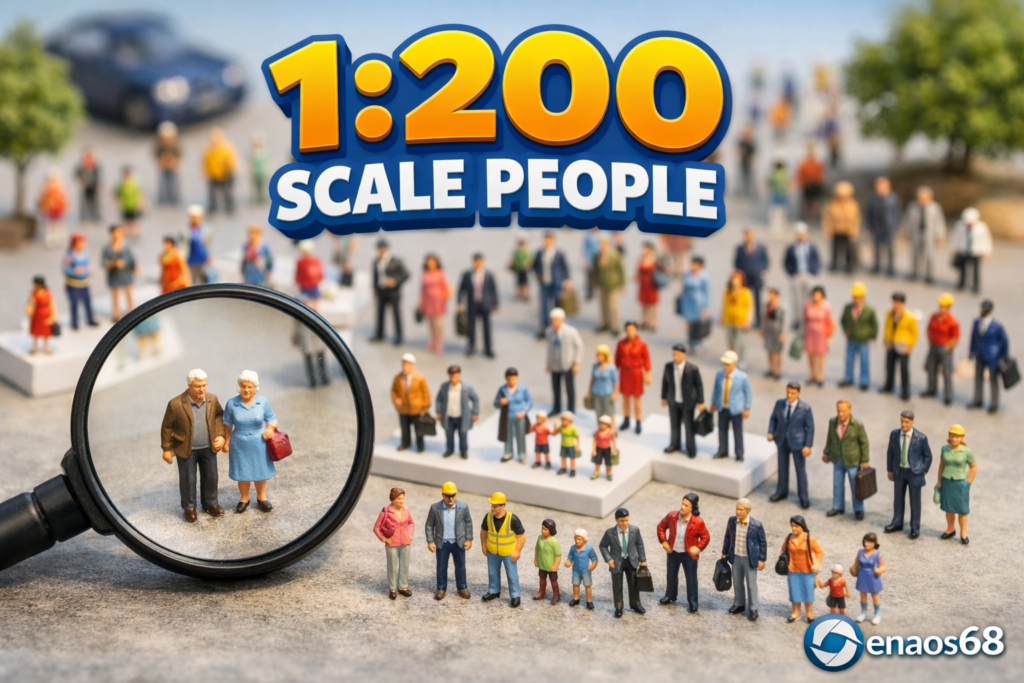
1 200 scale people are extremely small miniature human figures used in models to represent real-life people in a scaled-down way. The term “1:200 scale” simply means that every 1 unit in the model equals 200 units in real life, so these figures are tiny versions of actual humans, often measuring only around 8–10 millimeters tall. Even though they are very small, they play a big role in making models look realistic and alive, especially in architecture, ship modeling, and city layouts.
In simple words, imagine shrinking a real person 200 times smaller — that’s exactly what a 1:200 scale person figure represents. These figures are commonly used by architects, hobbyists, and model builders to show how a space will look when people are inside it. For example, when creating a building model, adding 1 200 scale people figures helps viewers understand the size, proportion, and purpose of the design. Without them, a model can feel empty and hard to understand, but with them, it becomes more relatable and visually complete.
Understanding the 1:200 Scale Ratio in 1 200 Scale People
Understanding the 1:200 scale ratio is very important if you want to use 1 200 scale people correctly in your models, and the idea behind it is actually quite simple once you break it down in easy words. The scale “1:200” means that one unit in the model equals 200 units in real life, so if a real person is around 170 centimeters tall, their miniature version in a 1:200 scale will be about 8.5 millimeters tall, which is extremely small, almost the size of a grain of rice. This ratio helps designers and hobbyists shrink large real-world objects into manageable model sizes while keeping everything in the correct proportion, so buildings, vehicles, and people all look balanced together. When you place 1:200 scale people figures next to a building model, they help viewers instantly understand how big or small that building is in real life, which makes the entire model more meaningful and realistic.
Another important thing to understand is how 1 200 scale people compare with other popular scales, because many beginners often get confused when mixing different sizes in one model. For example, a 1:100 scale person would be almost twice as tall as a 1:200 figure, which means using them together would look unrealistic and unbalanced, so maintaining the correct scale is very important for accuracy. The beauty of 1:200 miniature people is that they are perfect for large projects like city layouts, airports, and ship models where space is limited but detail is still needed, allowing you to show many elements without making the model too big. Once you understand this scale properly, it becomes much easier to choose the right figures, place them correctly, and create models that look professional, realistic, and visually impressive without any confusion in size or proportion.
Types of 1 200 Scale People Figures
When it comes to 1 200 scale people, there is a surprising variety available that can suit different modeling needs, and understanding these types can make a big difference in the realism and detail of your project. These figures come in pre-painted versions, which are ready to use right out of the package and often include fine details like clothing color, facial features, and hair styles, making them perfect for hobbyists who want convenience and immediate results. On the other hand, unpainted or blank figures give modelers the freedom to customize every aspect of the miniature, from skin tone to clothing patterns, allowing for complete creative control. The figures are also made from different materials such as plastic, which is lightweight and easy to handle, resin, which allows for finer details, and even 3D printed versions, which are increasingly popular for custom or rare poses that are not commonly available in stores. The poses themselves vary widely, ranging from people standing casually or walking, to sitting, working, or performing specific activities like construction, office tasks, or street interactions, so modelers can create dynamic and realistic scenes.
These variations in type and style mean that 1 200 scale people figures can be used in almost any miniature scene, from modern urban landscapes to historical dioramas, and even in transport models like ships, planes, and trains. Themed sets are also common, such as airport staff, city pedestrians, or ship crew, which makes it easy to populate a model consistently without needing to mix unmatched figures. Additionally, the rise of custom 3D printing has allowed hobbyists to create figures in very specific poses or even replicate real people in miniature form, which adds a unique personal touch to models. Choosing the right type of 1 200 scale miniature people involves thinking about the scene you want to create, the level of detail you desire, and how much customization you are willing to do. With the right figures, a model that might otherwise look static or empty can come to life, with tiny people bringing scale, perspective, and a sense of realism that immediately draws viewers into the miniature world.
Best Uses in Models and Dioramas for 1 200 Scale People
1 200 scale people play a crucial role in making models and dioramas feel alive and realistic, and their uses extend far beyond simply filling empty space. In architectural models, adding these tiny figures allows architects and designers to demonstrate how people will move through a building or interact with the surrounding environment, making presentations more engaging and easier to understand for clients and stakeholders. They are especially useful in urban planning projects, where showing the scale of streets, parks, and public areas in relation to human figures helps viewers grasp the proportions and layout of a city. In the world of model railways, these figures are essential for creating bustling train stations, busy platforms, or quiet suburban neighborhoods, helping to tell a story within the miniature scene. Ship models and aircraft dioramas also benefit greatly, as crew members, passengers, or pilots in 1:200 scale instantly provide a sense of size and functionality that would otherwise be difficult to convey with vehicles alone. By using these tiny figures thoughtfully, a model can feel immersive and interactive, drawing the viewer into a realistic, miniature world.
Beyond simply adding visual appeal, 1 200 scale people are also used to convey activity and purpose within a scene, turning static models into dynamic stories. For instance, placing figures walking along streets, sitting on benches, or performing tasks like construction or maintenance adds narrative depth, giving life to even the smallest architectural or transport projects. Hobbyists often use them in dioramas to create everyday life scenes, like a busy marketplace, an airport terminal, or a naval ship deck, which makes the models not just accurate but emotionally engaging. Furthermore, these figures help with planning and design decisions, such as showing how crowded a public space might become or how people will move through an environment. When carefully positioned, 1 200 scale miniature people provide perspective, scale, and storytelling, turning any model or diorama into a miniature world that feels real, relatable, and visually compelling.
How to Choose the Best 1 200 Scale People Figures
Choosing the right 1 200 scale people figures can make a huge difference in the realism and effectiveness of your models, and it requires more than just picking the first set you see. The first thing to consider is scale accuracy, because even a slight difference in size can look obvious when placed next to buildings, vehicles, or other figures, breaking the sense of realism. Next, the level of detail matters, especially if your model is meant for close-up viewing or display. Figures with clear facial features, realistic clothing folds, and natural poses create a far more convincing scene than those that look blocky or generic. The material is also important, as plastic figures are lightweight and easy to handle, resin figures often offer finer details but are more fragile, and 3D printed figures can be fully customized but require some skill to finish properly. Hobbyists should also think about the type of scene they are creating and choose poses that match the activity, whether it’s walking, sitting, working, or socializing, so that each figure contributes to the overall story of the model.
Budget and availability are additional factors to consider when selecting 1 200 scale miniature people, as high-quality, pre-painted figures can be more expensive but save time, while unpainted or custom figures offer flexibility but require patience and skill. It is also wise to look at reputable brands or suppliers, as consistent quality ensures that all figures in a set look cohesive and professional, which is particularly important in architectural presentations or competitive modeling projects. Matching the style of your figures to the rest of the model is another key consideration, because a modern, casual figure will look out of place in a historical or formal setting. Many experienced modelers recommend starting with smaller sets and experimenting with placement and combinations before committing to a large number of figures, which helps to understand scale and pose effectiveness. Ultimately, selecting the right 1 200 scale people is about balancing scale, detail, material, pose, and budget to create a miniature world that feels authentic, engaging, and visually consistent from every angle.
Painting and Customizing 1 200 Scale People
Painting and customizing 1 200 scale people can transform simple miniature figures into highly realistic elements that bring any model or diorama to life. While pre-painted figures are convenient, many hobbyists prefer to paint unpainted figures themselves to achieve specific color schemes, unique uniforms, or thematic clothing that matches their scene. Painting these tiny figures requires patience, fine brushes, and sometimes a magnifying glass, because even small mistakes are noticeable at this scale. Acrylic paints are often recommended because they dry quickly, offer vibrant colors, and can be layered to create subtle shading or highlights. Adding tiny details like facial expressions, hair highlights, or slight variations in clothing color makes a huge difference, turning a generic miniature into a realistic human figure that blends naturally into the scene. Customization also allows you to modify poses or create entirely new figures using small cuts, bending, or even 3D printing additional parts, giving each miniature a unique personality.
Beyond painting, hobbyists often use techniques to enhance realism in 1:200 scale people, such as adding shadows, slight dirt effects, or even miniature accessories like hats, bags, or tools that correspond to the activity being depicted. Some advanced modelers create entire themed sets, like workers at a construction site, passengers in an airport, or families walking in a park, all painted and posed to tell a visual story. Protective coatings or sealants are used to prevent paint from chipping and to ensure that the figures last over time, especially if the model will be handled frequently. Through careful painting and thoughtful customization, these tiny figures go from simple plastic or resin shapes to fully believable representations of human life, enhancing the scale, storytelling, and emotional impact of any model or diorama, making viewers feel as if they are looking at a real scene in miniature form.
Where to Buy 1 200 Scale People
Finding the right 1 200 scale people figures can feel overwhelming at first because there are many options, but knowing where to look makes the process much easier and ensures you get high-quality miniatures that match your project. Online marketplaces like Amazon, eBay, and AliExpress offer a wide variety of figures, from pre-painted sets to unpainted models that can be customized, and browsing customer reviews and photos can help you choose reliable options. Specialty hobby shops, particularly those focused on model railways, architectural supplies, or diorama materials, often carry carefully curated figures that are more accurate in scale and detail, and they sometimes provide expert advice or the chance to see the miniatures in person before buying. Some modelers also turn to 3D printing services, which allow for custom figures in specific poses or with unique designs, giving the flexibility to create something truly original that cannot be found in standard sets. No matter where you buy, it is important to check the scale consistency, material quality, and level of detail to ensure the figures fit seamlessly into your model or scene.
It is also worth considering the price and packaging when buying 1 200 scale miniature people, as some high-quality sets may be more expensive but include a large number of figures, detailed poses, or themed collections that are perfect for architectural or city models. Bulk purchases can be especially useful for large layouts like cityscapes or train stations where you want to show crowds, while smaller sets work well for focused scenes or dioramas. Experienced modelers recommend starting with a few sample sets to understand how they fit into your project and how easy they are to handle, paint, and place in the model. By combining online stores, specialty shops, and custom 3D printing, hobbyists can assemble a diverse collection of 1 200 scale people that allows for realistic scenes, storytelling, and visual impact, ensuring that every miniature contributes meaningfully to the overall model.
Tips for Using 1 200 Scale People Realistically
Using 1 200 scale people effectively is about more than just placing them in a model; it’s about creating a sense of life, movement, and scale that makes the miniature scene believable. Positioning figures thoughtfully is key: people walking along streets, sitting on benches, or interacting with vehicles and buildings help convey activity and purpose, making the environment feel natural. Placing too many figures too close together can look crowded and unrealistic, while too few can make a scene feel empty, so finding a balance is essential. Paying attention to perspective and depth also enhances realism, as smaller or partially obscured figures can create the illusion of distance and scale, just like in real life. Even tiny details, like having a figure hold a briefcase, a newspaper, or a shopping bag, contribute to storytelling and make each scene feel intentional and complete.
Lighting and layout also play a significant role in how 1 200 scale miniature people are perceived. Shadows and highlights can make figures appear more three-dimensional and help them blend naturally with buildings, vehicles, and terrain. Grouping figures in realistic interactions, such as families walking together, workers collaborating on a construction site, or passengers waiting at a train station, adds authenticity and narrative depth. Combining these tiny figures with vehicles, trees, street lamps, and other scaled elements further strengthens the illusion of a miniature world. By carefully planning placement, orientation, and interactions, modelers can turn simple plastic or resin figures into lively scenes that capture attention, convey stories, and demonstrate the true value of 1 200 scale people in creating models that are not only accurate but visually captivating.
Common Problems and Solutions with 1 200 Scale People
Working with 1 200 scale people comes with its own set of challenges, especially because the figures are so tiny and delicate. One of the most common issues is handling difficulty, as the small size makes them easy to drop, lose, or damage during placement. Using fine tweezers, magnifying glasses, or small clamps can help modelers position the figures accurately without causing chips or breaks. Another frequent problem is scale mismatch, where figures from different sets or brands may vary slightly in height or proportion, making the scene look inconsistent. To solve this, it is important to check the specifications of each set before buying and, when necessary, trim or adjust figures to match the correct height. Paint chipping is also common, especially with pre-painted figures that are handled frequently, and this can be mitigated by using sealants or protective coatings that lock the paint in place without altering the miniature’s appearance.
Storage and organization present another challenge when working with 1:200 scale miniature people, as their small size makes them easy to misplace or mix up with other figures. Many hobbyists use compartmentalized boxes, foam inserts, or labeled containers to keep figures sorted by pose, color, or theme, ensuring that they are easy to access when building a model. Sometimes figures may get damaged or broken despite careful handling, but small repairs using modeling glue, replacement parts, or minor adjustments can often restore them. Additionally, beginners may struggle with placing figures naturally, making scenes look stiff or unrealistic; practicing different arrangements and observing real-life movements or photos can improve placement. By understanding these common challenges and implementing practical solutions, hobbyists can make the most of 1 200 scale people, creating detailed, dynamic, and visually appealing models that stand up to close inspection and maintain their realism over time.
FAQs About 1 200 Scale People
Many beginners and even experienced modelers often have questions about 1 200 scale people, and understanding the answers can save time and help create better models. One common question is about how tall a 1:200 scale person actually is, and the answer is that an average adult figure measures around 8 to 10 millimeters, depending on the real-life height it represents. People also wonder if these figures are compatible with other model scales, such as HO scale for railways, and while there can be slight differences, careful selection and placement can make them blend well in mixed-scale layouts. Another frequent query is whether it is possible to 3D print 1 200 scale figures at home, and advances in 3D printing technology have made this feasible, though it requires a high-resolution printer, proper scaling, and post-processing to achieve fine details. Questions about the best materials also come up, with plastic being popular for affordability and ease of handling, resin preferred for fine detail, and painted versus unpainted options giving hobbyists flexibility depending on their project goals.
Other common inquiries include whether pre-painted figures are worth the investment and how to achieve realistic poses and scenes in a layout. Pre-painted figures save time and provide consistent color, which is ideal for large-scale projects or beginners, while unpainted figures allow for creative customization and personalized details. Hobbyists often ask for tips on making scenes look natural, and the key lies in careful placement, thoughtful interaction between figures, and combining them with other miniature elements such as vehicles, buildings, or accessories. Observing real-life human behavior, like how people walk, stand, or gather in groups, helps in arranging figures convincingly. By addressing these FAQs and understanding the practicalities of 1 200 scale miniature people, modelers can avoid common mistakes, enhance the realism of their projects, and confidently create detailed and immersive miniature worlds that communicate scale, activity, and life.
Final Thoughts on 1 200 Scale People
1 200 scale people are small in size but enormous in impact when it comes to creating realistic and engaging models or dioramas. These tiny figures allow hobbyists, architects, and model builders to communicate scale, proportion, and activity in a way that no building or vehicle alone can achieve. By carefully selecting the right figures, placing them thoughtfully, and customizing them with paint or accessories, even the smallest model can tell a story and feel alive. Whether used in an urban city layout, a busy train station, a ship deck scene, or an architectural presentation, these miniature people help viewers immediately understand the space and visualize life within it. Their presence turns static models into immersive worlds, providing a sense of perspective and realism that captivates anyone who looks at them.
Understanding the scale, types, and practical use of 1 200 scale people is essential for both beginners and advanced modelers. While challenges like tiny size, delicate handling, and painting complexity exist, careful planning, proper tools, and attention to detail can overcome them, making these figures a rewarding addition to any project. Investing in quality figures, experimenting with placement, and customizing poses or colors can dramatically enhance a model’s visual appeal and storytelling. Ultimately, 1:200 scale miniature people are not just decorative elements—they are an essential part of creating miniature worlds that feel authentic, lively, and professional. With patience, creativity, and understanding, anyone can use these tiny figures to elevate their models from simple layouts to dynamic, realistic representations of real life.