
Table of Contents
What Is the 179D Deduction and Why It Matters
The 179D deductions technical certification process starts with understanding what the 179D deduction actually is and why it has become so important in recent years, especially after updates under the Inflation Reduction Act. In simple words, Section 179D is a tax benefit created by the U.S. government to encourage energy-efficient buildings, allowing building owners and designers to claim deductions when they install systems that reduce energy usage such as lighting, heating, cooling, and insulation. This deduction can be very valuable, often reaching up to $5.00 per square foot, which means large commercial buildings can save thousands or even millions of dollars in taxes, making it one of the most powerful incentives available in the construction and real estate industry today.
To make this easier to understand, think of the 179D deduction as a reward system where the government says, “If you make your building energy-efficient, we will reduce your tax burden.” This applies not only to private building owners but also to architects, engineers, and contractors who work on government or tax-exempt buildings, because in those cases the deduction can be transferred to the designer. The systems that usually qualify include lighting systems, HVAC (heating and cooling), and the building envelope like walls and roofs, all of which must meet specific energy-saving standards compared to a baseline building model. What makes this deduction unique is that it is directly tied to measurable performance, meaning you cannot simply claim it—you must prove that your building actually saves energy, and that is where the technical certification process becomes essential.
What Is the 179D Technical Certification Process
The 179D deductions technical certification process is the most important step in actually claiming the tax benefit, because without this certification, the deduction cannot be legally approved by the IRS. In simple terms, this process is a detailed verification carried out by a qualified third-party professional, usually a licensed engineer, who checks whether a building truly meets the required energy efficiency standards. It is not just a basic review; instead, it involves a combination of energy modeling, real-world inspection, and technical analysis to compare how the building performs against a standard reference model defined by industry rules like ASHRAE. The purpose of this process is to make sure that only buildings that genuinely reduce energy usage receive the tax benefit, which protects the integrity of the program and ensures fairness for all applicants.
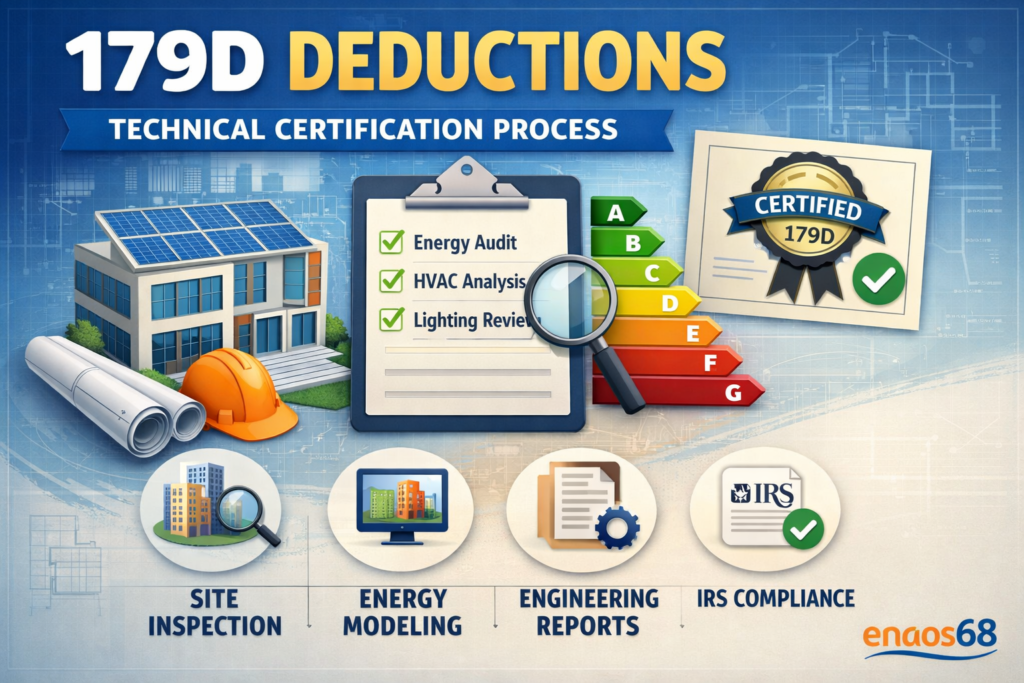
When you look at the 179D technical certification process more closely, it becomes clear that it follows a structured path where every step builds toward proving energy savings in a reliable way. First, experts analyze the building design and systems, then they simulate energy performance using approved software, and finally they physically inspect the building to confirm everything matches what was modeled. After all this is completed, the engineer prepares an official certification report that confirms compliance with IRS requirements, which is then used during tax filing. This process may sound complex, but in reality, it is designed to give confidence to both the taxpayer and the government that the claimed deduction is accurate and justified, which is why working with experienced professionals is often recommended to avoid errors and ensure a smooth certification journey.
Step-by-Step 179D Certification Process
The 179D deductions technical certification process involves several important steps that work together to ensure a building qualifies for the tax deduction. The process begins with a thorough feasibility analysis, where the building owner or designer evaluates whether the project is eligible and estimates the potential deduction. During this phase, experts review building plans, identify which systems such as lighting, HVAC, and the building envelope could qualify, and determine the best approach for certification, either through energy modeling or measurement. This stage is critical because a careful assessment at the beginning can prevent mistakes later, ensuring that all systems meet the minimum energy savings requirements and are designed in a way that will satisfy IRS standards. Once feasibility is confirmed, the project moves into energy modeling, which is the most technical part of the process. Licensed engineers use specialized software to create simulations comparing the proposed building’s energy use to a standard reference building. This modeling takes into account the exact specifications of equipment, lighting designs, heating and cooling systems, and insulation, producing detailed reports on potential energy savings. The modeling step ensures that the building’s design meets or exceeds the energy performance targets required for the deduction.
After modeling, the process moves into on-site verification, which involves physically inspecting the building once the systems are installed. The engineer checks that everything matches the energy model and that the installed equipment performs as expected. This step is crucial because the IRS requires real-world confirmation, not just theoretical calculations, to validate the deduction. Following inspection, the engineer prepares the official certification report, which includes energy savings calculations, compliance verification, and all supporting documentation. This report is submitted as part of the tax filing process, typically alongside IRS Form 7205, which formally documents the deduction. By completing these steps carefully and accurately, building owners and designers can ensure they receive the full benefit of the 179D deduction, while also protecting themselves from potential audits or disputes. Many case studies show that buildings that follow this structured approach achieve maximum deductions, with some large commercial projects saving hundreds of thousands of dollars in taxes, making the investment in technical certification well worth the cost.
Who Can Perform 179D Certification
The 179D deductions technical certification process can only be performed by a licensed professional engineer who meets the IRS’s independence requirements, meaning they cannot be directly related to the building owner or have a financial interest in the project. This ensures that the certification is objective and unbiased, which is crucial because the IRS relies on these third-party confirmations to validate the claimed deductions. Engineers who conduct 179D certifications are typically experienced in energy modeling, building systems, and federal compliance standards, allowing them to accurately assess lighting, HVAC, and building envelope improvements. In many cases, companies hire specialized engineering firms or consultants who handle the entire process from energy modeling to on-site inspection, making it simpler for building owners or designers to navigate the complex technical and regulatory requirements. The independence and expertise of the certifying engineer protect both the taxpayer and the government, ensuring that the deductions are legitimate and that buildings truly meet the intended energy efficiency goals.
It is also important to understand that while the engineer performs the certification, the responsibility for providing accurate documentation and facilitating inspections lies with the building owner or designer. This collaboration ensures that all design documents, equipment specifications, and energy performance data are complete and accurate, which is essential for a successful certification. In many cases, the 179D technical certification process is not only a compliance requirement but also an opportunity for building owners to identify additional energy-saving improvements, as engineers often highlight areas where efficiency could be further increased during the inspection. By choosing qualified professionals and working closely with them throughout the process, businesses and designers can maximize their deduction while also gaining valuable insights into building performance, making the certification an investment that benefits both finances and long-term sustainability.
Key Requirements for 179D Certification
The 179D deductions technical certification process is guided by specific requirements set by the IRS to ensure that only buildings achieving genuine energy savings are rewarded with tax deductions. One of the most important requirements is compliance with ASHRAE 90.1 standards, which define baseline energy use for commercial buildings and set the minimum efficiency targets for lighting, HVAC, and building envelope systems. The building must demonstrate measurable energy savings compared to this baseline, and the certification report must clearly show that each system contributes to the total reduction. Documentation is another critical requirement, as the IRS mandates detailed records of the building design, equipment specifications, modeling results, and on-site inspections. For projects that involve government buildings or tax-exempt entities, additional rules such as the allocation to designers instead of owners and adherence to prevailing wage and apprenticeship regulations may apply, which can affect the size of the deduction. Meeting all these requirements is essential not only to qualify for the deduction but also to protect against potential IRS audits, which carefully review both the technical certification and supporting documentation.
Another key requirement is the timing of the certification, which must correspond to the building’s placed-in-service date, as the deduction is tied to the tax year when the building becomes operational. Energy modeling must reflect the final installed systems, and on-site inspections must be conducted after installation to verify compliance. The engineer’s certification must include all necessary details such as professional credentials, energy savings calculations, and confirmation that the systems meet or exceed the minimum efficiency thresholds. Any missing information or discrepancies can lead to denial of the deduction, so thoroughness is critical. The process also encourages transparency and accuracy, as every component of the building contributing to energy savings must be documented and justified. By understanding and adhering to these key requirements, building owners and designers can confidently navigate the 179D technical certification process, ensuring that they not only maximize their tax benefits but also enhance the energy efficiency and sustainability of their buildings, which can lead to long-term operational savings and a stronger environmental impact.
Common Mistakes to Avoid
The 179D deductions technical certification process can be complex, and many building owners and designers make common mistakes that can prevent them from fully claiming the deduction or create issues during an IRS review. One of the most frequent errors is skipping the third-party certification or using an engineer who does not meet the independence requirement. Without proper certification, the IRS will not allow the deduction, no matter how energy-efficient the building is. Another typical mistake is relying on inaccurate or incomplete energy modeling, such as using incorrect equipment specifications, overlooking certain systems, or failing to follow ASHRAE baseline standards. These errors can lead to underestimated or overestimated energy savings, which can cause delays or rejections when filing the deduction. Many owners also underestimate the importance of thorough documentation, failing to include detailed drawings, equipment specifications, and inspection reports, which are all necessary to support the deduction during an IRS audit. Additionally, misunderstanding the allocation rules for government or tax-exempt buildings is another common pitfall, where the deduction should go to the designer rather than the building owner, creating confusion if not properly documented.
Other mistakes often occur during the tax filing process itself, such as submitting Form 7205 incorrectly or filing before all certification documentation is complete. Some building owners attempt to claim retroactive deductions without proper verification, which can result in denied claims or penalties. Timing errors, such as not linking the certification to the building’s placed-in-service date, are also common and can invalidate a deduction. Another oversight is assuming that all energy-saving upgrades automatically qualify, when in fact each system must independently meet the minimum energy reduction thresholds. By understanding these common mistakes and proactively addressing them with careful planning, accurate modeling, complete documentation, and working with experienced certified engineers, building owners and designers can avoid setbacks, ensure IRS compliance, and confidently claim the full benefits of the 179D deduction. Successful case studies consistently show that projects that pay close attention to these details receive the maximum allowed deduction and enjoy both financial savings and long-term operational efficiency.
Timeline, Costs, and ROI
The 179D deductions technical certification process involves both time and investment, but the return on investment often makes it highly worthwhile for building owners and designers. Typically, the full certification process can take anywhere from two to six weeks, depending on the size and complexity of the building, the number of systems being evaluated, and the availability of detailed design documents. The process begins with feasibility analysis and energy modeling, which requires careful attention to the building’s specifications, followed by on-site inspection and the preparation of the final certification report. Costs vary based on project size and complexity, but engaging experienced engineers and consultants usually ranges from a few thousand to tens of thousands of dollars. While this may seem significant, the deduction itself can far exceed these costs, often saving hundreds of thousands of dollars in taxes for larger commercial buildings, especially when multiple systems like lighting, HVAC, and the building envelope are optimized for energy efficiency.
The return on investment is not limited to tax savings alone; buildings that undergo the 179D technical certification process often see long-term operational benefits as well. By improving energy efficiency, owners can reduce utility bills, increase the lifespan of equipment, and enhance the overall comfort and sustainability of the building. Many case studies demonstrate that buildings that complete the certification process correctly achieve deductions at the maximum allowed rate, while also gaining insights into additional energy-saving measures that may not have been considered initially. For example, some projects have realized that minor adjustments to HVAC controls or lighting systems during certification can result in incremental energy savings that further increase the deduction. With careful planning and adherence to the certification requirements, the combination of immediate tax benefits and ongoing operational savings makes the 179D deduction a strategic and financially rewarding opportunity for commercial property owners and designers.
FAQs About 179D Certification
The 179D deductions technical certification process raises many questions from building owners, designers, and tax professionals, and understanding the most common concerns can help ensure a smooth experience. One frequent question is how long the certification process takes, which can vary depending on the building size, complexity of energy systems, and availability of design documents. Typically, the process can take between two to six weeks, but larger projects may require more time to complete accurate modeling and inspections. Another common question is whether a building can claim the deduction without certification. The answer is no, because IRS rules require independent verification of energy savings through a licensed engineer to validate the claimed deduction. People also often ask what documents are necessary for compliance, and these include detailed building plans, energy model results, equipment specifications, inspection reports, and the final engineer certification report. Understanding these requirements in advance helps prevent delays and ensures that the claim will be accepted without complications.
Other frequently asked questions revolve around the difference between modeling and measurement pathways and whether retrofits qualify for the deduction. Modeling pathways rely on simulations of proposed designs compared to standard reference buildings, while measurement pathways depend on actual energy usage data from installed systems. Retrofits can qualify as long as they achieve the required energy savings and undergo proper certification, which can be especially beneficial for older buildings seeking efficiency upgrades. Additionally, many building owners worry about IRS audits and what might trigger them. During an audit, the IRS may request the certification report, allocation letter for designer deductions, and verification of the energy model’s assumptions. By having complete and accurate documentation and working with experienced engineers, building owners can confidently navigate the audit process, maximize their deductions, and avoid penalties, making the certification process both a legal requirement and a valuable opportunity to enhance building efficiency.
Final Thoughts
The 179D deductions technical certification process is more than just a regulatory requirement; it is a strategic tool that allows building owners and designers to unlock significant financial and operational benefits. By carefully following each step of the certification—from initial feasibility analysis to energy modeling, on-site inspection, and final engineer certification—projects can ensure full compliance with IRS standards while maximizing the potential deduction. The process may seem complex, but with the right professionals and attention to detail, it becomes an opportunity to not only reduce taxes but also improve energy efficiency, lower operational costs, and enhance the overall sustainability of the building. The combination of immediate tax savings, long-term operational benefits, and environmental impact makes the 179D deduction a unique advantage for commercial properties, particularly as energy efficiency becomes increasingly central to corporate and governmental priorities.
Moreover, understanding the key requirements, common pitfalls, and the roles of licensed engineers ensures that the certification process is smooth and effective. Buildings that undergo proper certification not only protect themselves from IRS audits but also gain a clear picture of their energy performance, often revealing opportunities for further efficiency improvements that might not have been considered initially. For many property owners, the 179D deduction transforms energy-efficient upgrades from a regulatory compliance task into a financially rewarding strategy that enhances both the building’s performance and its market value. As the demand for sustainable and energy-conscious construction grows, the 179D deductions technical certification process remains a vital resource for those looking to optimize tax benefits, drive operational savings, and contribute to a greener future.