
Table of Contents
What Is the 100 Days Celebration in Korea (Baek‑il)?
The 100 days celebration Korean, also known as Baek‑il (백일), is a special tradition in Korea that celebrates a baby reaching 100 days of life. This celebration is very meaningful because, in the past, infant mortality was high, and reaching 100 days meant the baby had survived the most vulnerable time. Families celebrate with joy, food, prayers, and sometimes gifts. Traditionally, the baby is dressed in hanbok, which is a colorful Korean outfit, and families gather to honor the child and share blessings for a long and healthy life. The event is not only a way to celebrate the baby but also a way to show gratitude to ancestors and family members. Over time, Baek‑il has also become a modern celebration where parents share pictures, throw small parties, and post about it on social media while still respecting the traditional customs. This event is smaller than the first birthday celebration called Doljanchi, but it remains a very important cultural milestone in Korea.
The Origin & History of Korean 100 Days Celebration
The 100 days celebration Korean, or Baek‑il, has a deep history that reflects Korea’s cultural values and beliefs about life and health. Long ago, infant mortality was very high, and many families feared that babies might not survive their first months. Reaching 100 days was considered a huge milestone and a reason to celebrate because it meant the child was strong and healthy. Families would perform special prayers and rituals to honor the ancestors and seek protection for the baby’s future. This practice came from a mixture of shamanistic beliefs and Confucian traditions, where ancestors played an important role in family life. The number 100 itself was significant because it represented completeness, longevity, and good fortune, making the celebration a way to show gratitude and hope for the child’s long and happy life.
Over the years, the meaning of the 100 days celebration Korean has evolved but still retains its traditional importance. While families in the past focused on religious and protective rituals, today the celebration often combines traditional customs with modern touches. Parents may dress the baby in a bright hanbok, take professional photos, and invite friends and family for a small party with cakes and decorations. Despite modernization, the essence of Baek‑il remains the same: it is a heartfelt celebration of a baby’s health, the family’s happiness, and a meaningful connection to Korean heritage. By honoring this 100-day milestone, families continue to pass down cultural values while making beautiful memories that last a lifetime.
Traditional Customs & Rituals of a Korean Baek‑il
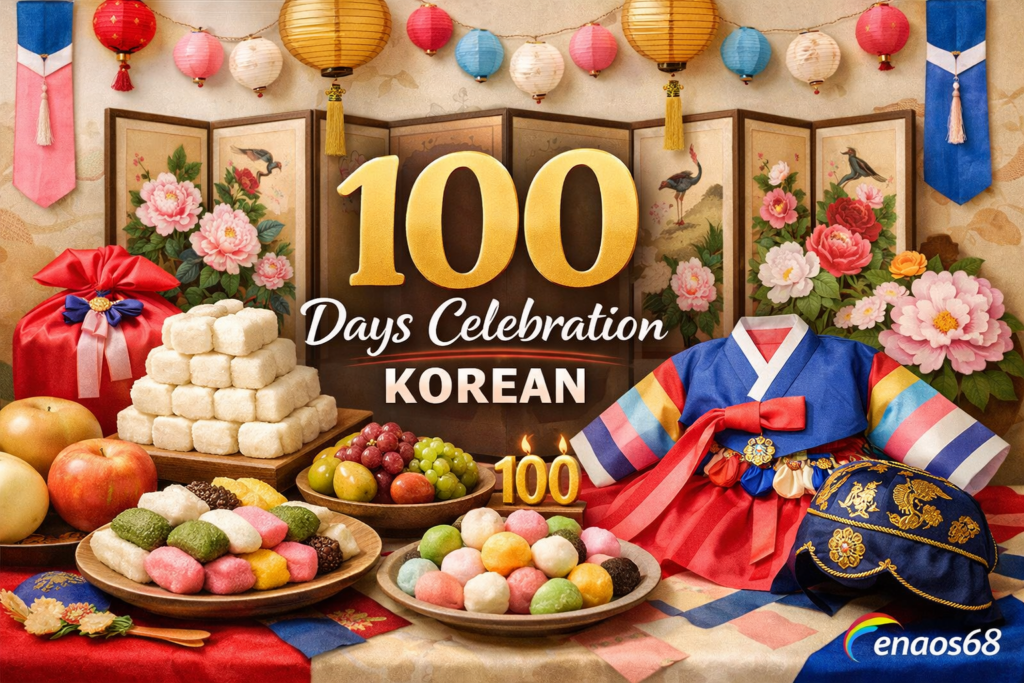
The 100 days celebration Korean, or Baek‑il, is full of traditional customs that make it a meaningful and memorable event for families. One of the most important traditions is preparing and sharing baekseolgi, which is a white rice cake made specifically for the occasion. The white color symbolizes purity, innocence, and the hope for the baby’s bright future. Families often give these rice cakes to at least 100 guests, symbolizing sharing the joy and blessings of the child with others. In addition to rice cakes, parents may prepare special foods and drinks, and sometimes display them on a decorated table to honor the baby. These offerings are often accompanied by prayers or words of gratitude, showing respect to ancestors and expressing hopes for the baby’s good health, happiness, and prosperity. Traditionally, this ceremony also included small rituals led by elders or family members, making it a spiritual as well as social occasion.
Another essential custom is dressing the baby in a colorful hanbok, the traditional Korean attire, and taking photographs to commemorate the milestone. The hanbok not only enhances the beauty of the celebration but also connects the family to their cultural heritage. Many families today also include modern touches, such as cakes, balloons, or themed decorations, blending tradition with contemporary celebration styles. Guests often bring gifts, typically symbolic items like money in a white envelope, clothing, or small keepsakes, which are meant to bring luck and happiness to the baby. While the core of Baek‑il is about gratitude and protection, these customs make the day festive, creating lasting memories for the baby, parents, and extended family. Even in urban settings where celebrations are smaller, families try to maintain these traditional rituals to honor the cultural significance of the 100 days celebration Korean.
How 100 Days Celebration Korean Is Observed Today
Today, the 100 days celebration Korean has grown to include both traditional and modern elements, making it a special and joyful occasion for families. In contemporary Korea, many parents host small gatherings or parties at home or in restaurants, inviting close family and friends to celebrate the baby’s first major milestone. The event often features a beautifully decorated table with baekseolgi, fruit, drinks, and sometimes a modern cake decorated with cute themes or the baby’s name. While the original rituals of offering prayers to ancestors are still observed by some families, many also take the opportunity to create a festive and fun atmosphere, blending the old customs with today’s style of celebration. Photography has become a key part of the modern celebration, with parents often hiring professional photographers to capture the baby in a colorful hanbok and the cheerful decorations, preserving memories that can be shared with friends and family online and kept as a family keepsake for years.
In urban areas, celebrations are often simpler and more intimate, focusing on creating a joyful environment while still respecting cultural traditions. Some parents also give small gifts to guests, usually symbolic items like candy, money envelopes, or small mementos, which reflect gratitude and good wishes for the baby’s future. Even though the scale and style of the 100 days celebration Korean may vary, the underlying meaning remains strong: it is a day to honor the baby’s health, express happiness, and celebrate life with loved ones. Families see it as a way to strengthen bonds, connect with traditions, and share joy with the community, making Baek‑il a meaningful event that bridges the past with the present while highlighting the baby’s first journey into life.
Popular Traditions Related to 100 Days in Korean Culture
The 100 days celebration Korean is not just about babies; it is also part of a wider cultural tradition that emphasizes milestones and special anniversaries. In Korea, the number 100 has long been considered symbolic of completeness, prosperity, and longevity, which is why this celebration carries such importance. Beyond the Baek‑il for infants, Koreans also observe 100-day milestones in relationships, such as celebrating a couple’s 100-day anniversary, which has become a modern romantic tradition. These celebrations often involve giving gifts, going out for special meals, or posting on social media to mark the occasion. The focus on the number 100 shows how Korean culture values symbolic numbers and milestones as a way to recognize progress, health, and happiness in life. By celebrating these moments, families and communities reinforce connections and share joy, keeping traditions alive in both personal and social contexts.
Additionally, the 100 days celebration Korean reflects the importance of family and social bonds in Korean culture. Whether in rural villages or modern cities, families use this day to invite relatives and friends to share in the joy, reinforcing a sense of community. Even in modern settings, parents often maintain the practice of giving small gifts or rice cakes to guests, keeping the ritual of sharing and gratitude alive. Some families also include prayers or blessings for the baby’s continued growth, combining ancient beliefs with modern practices. The celebration is seen as a way to honor life, mark important beginnings, and instill values of gratitude and respect from the earliest days. By continuing to celebrate Baek‑il, Koreans preserve a tradition that bridges past and present, creating lasting memories and teaching younger generations the significance of cultural heritage and family togetherness.
Common Questions About the 100 Days Celebration Korean
Many people who are new to Korean culture often wonder what the 100 days celebration Korean is and why it is considered so important. One common question is what people typically say during the celebration. Families often greet the baby and parents with congratulatory words such as “축 백일” which means “Happy 100 Days,” expressing joy and wishing the child health and happiness. Another question people ask is about gifts. Traditionally, guests bring symbolic items like rice cakes, money in white envelopes, or small keepsakes meant to bring good fortune to the baby. Some families also wonder whether it is mandatory to celebrate Baek‑il. While it is not legally required, it remains a culturally significant milestone, and most families choose to observe it as a way to honor the baby and celebrate survival through the first 100 days of life, a period that was historically very risky.
Other questions often revolve around how the celebration compares to other Korean milestones. The 100 days celebration Korean is smaller than a first birthday party, or Doljanchi, but it carries unique cultural meaning because it reflects gratitude, survival, and family unity. Some people also ask if this tradition exists in other cultures. While Japan and China have similar customs to mark a baby’s early life, the Korean Baek‑il has its own distinctive practices such as sharing white rice cakes with at least 100 guests, wearing a hanbok, and offering prayers to ancestors. Overall, the 100-day celebration serves as both a joyful event and a way to connect with cultural heritage, and answering these common questions helps families and friends understand its significance while keeping the tradition alive in modern life.
Step-by-Step Guide to Hosting a 100 Days Celebration Korean
Hosting a 100 days celebration Korean can be a joyful and memorable experience if planned carefully while keeping both traditional and modern touches in mind. The first step is to decide on the type of celebration, whether it will be an intimate gathering at home or a slightly larger party at a restaurant. Parents usually prepare a table with baekseolgi, fruits, drinks, and sometimes a modern cake decorated with the baby’s name or cute themes. Dressing the baby in a colorful hanbok is an important part of the day, as it honors Korean heritage and makes for beautiful photos. Guests are typically invited close family members and friends, and invitations can be sent digitally or in traditional paper style, depending on preference. While traditional prayers or offerings to ancestors can be included, many families also focus on creating a warm, joyful, and festive atmosphere where everyone can share in the baby’s milestone.
The next step involves planning the flow of the day to ensure everything goes smoothly. It is customary to give small symbolic gifts to guests, such as money envelopes, candies, or keepsakes, reflecting gratitude and good wishes for the baby’s future. Photos and videos are often taken to capture the celebration, and some families even create a special backdrop or decorate the room with balloons and banners that highlight the 100-day milestone. Parents may also prepare a short speech or words of gratitude to express their joy and appreciation for their family and friends. By carefully combining these traditional and modern elements, the 100 days celebration Korean becomes a meaningful event that celebrates the baby’s health, strengthens family bonds, and honors a rich cultural tradition while creating cherished memories that last a lifetime.
Conclusion — Why the Korean 100 Days Celebration Still Matters
The 100 days celebration Korean continues to hold a special place in Korean culture because it celebrates more than just a baby reaching a milestone; it reflects the values of family, gratitude, and tradition that are deeply embedded in society. Even in modern times, when infant mortality is much lower and lifestyles have changed, families still honor Baek‑il as a way to express joy for the baby’s health and growth. The celebration allows parents to connect with their heritage, dress their child in traditional hanbok, share meaningful food like baekseolgi, and invite loved ones to witness and participate in a joyful moment that strengthens family bonds. This day is also a chance to pass on cultural knowledge to younger generations, helping children understand the importance of traditions, respect for elders, and appreciation for the blessings of life.
Furthermore, the 100 days celebration Korean has adapted beautifully to modern times without losing its essence. While traditional rituals and prayers may coexist with contemporary party decorations, photography, and social sharing, the heart of the celebration remains the same: honoring the child, the family, and the continuity of cultural heritage. It is a day that celebrates life, resilience, and hope, creating memories that last a lifetime. By observing Baek‑il, families maintain a connection to their roots, share happiness with friends and relatives, and highlight the importance of marking milestones in meaningful ways. The enduring popularity of this celebration shows that even in a fast-changing world, cultural traditions like the 100 days celebration remain vital, joyful, and full of significance for both the present and the future.