
Table of Contents
What Is a 100 kW Mobile Generator?
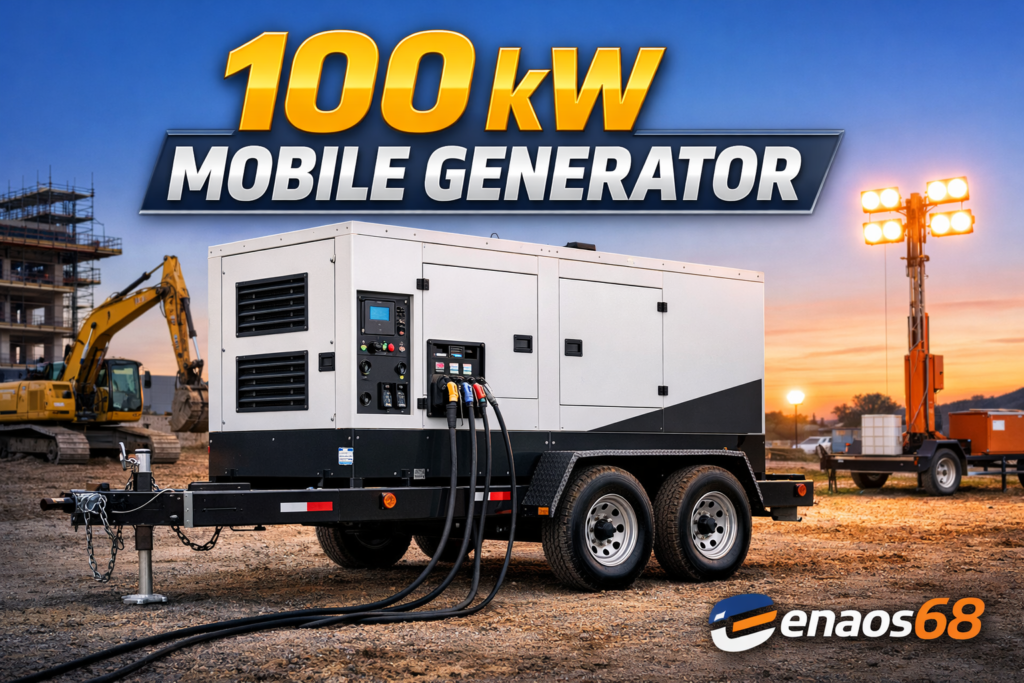
A 100 kW mobile generator is essentially a compact powerhouse that provides 100 kilowatts of electrical power in a portable package. These generators are designed to deliver reliable energy wherever it is needed, without the constraints of a fixed installation. Unlike standard generators that sit in one place, mobile generators are trailer-mounted or wheel-based, which allows them to be easily transported to construction sites, outdoor events, emergency zones, or remote work areas. The core components include a diesel or gas engine, which converts fuel into mechanical energy, an alternator that transforms this energy into electricity, a control panel to manage output and monitor system performance, and safety features like circuit breakers and overload protection. Many 100 kW mobile generators are also equipped with modern enhancements such as low-noise enclosures for quieter operation, automatic transfer switches for smooth backup power transitions, and remote monitoring systems to track performance and fuel usage. This combination of mobility, power, and reliability makes the 100 kW mobile generator an ideal choice for industries and applications where temporary or emergency power is critical. Additionally, these generators are often built to withstand tough conditions, making them durable enough for outdoor and industrial environments.
100 kW Mobile Generator Specifications & Power Capacity
A 100 kW mobile generator offers substantial electrical power that can support a wide range of applications, from construction sites to emergency backup for businesses. In practical terms, 100 kilowatts of power can run multiple heavy machines, lighting systems, HVAC units, and even small industrial operations simultaneously. These generators typically operate on diesel or gas, with diesel being more common due to its higher efficiency and durability for long-term use. The voltage output usually ranges between 208V to 480V, depending on whether the generator is designed for single-phase or three-phase power. The runtime of a 100 kW mobile generator varies according to fuel tank capacity and load, but many models can operate continuously for 8 to 12 hours at full capacity without refueling. Noise levels have also improved in modern generators thanks to soundproof enclosures, with many units operating at around 65 to 75 decibels, which is significantly quieter than older models. Understanding the difference between kW and kVA is important as well; kW measures actual power output, while kVA measures apparent power and is used for sizing the generator to the load it will serve. Proper sizing ensures that the generator runs efficiently without being overloaded, which can lead to wear or potential failure.
When considering power capacity, it is essential to calculate the total load that the generator will support. For example, a 100 kW mobile generator can comfortably supply energy for a small construction site powering tools like jackhammers, drills, and lights while simultaneously supporting temporary office trailers with air conditioning and computers. For events like outdoor concerts or festivals, it can run stage lighting, sound systems, food stalls, and other necessary equipment without interruption. In industrial settings, this generator can serve as a backup for small factories or workshops during power outages, ensuring production continuity and preventing costly downtime. Fuel consumption is another key aspect, with a diesel-powered 100 kW generator typically using around 7 to 10 gallons of diesel per hour at full load, which is efficient compared to older models or larger stationary generators. The mobility factor also adds significant value; because it can be towed to different locations, it becomes a flexible and convenient power solution for businesses that need temporary energy in multiple sites. This combination of power capacity, portability, and efficiency makes the 100 kW mobile generator a reliable and practical choice for industries, businesses, and emergency services that cannot afford interruptions in their electricity supply.
Key Features of a 100 kW Mobile Generator
A 100 kW mobile generator comes packed with features that make it reliable, durable, and easy to use in a variety of settings. One of the most significant advantages is its portability; mounted on a trailer or wheels, it can be transported to construction sites, outdoor events, or remote locations with minimal effort. The generator’s diesel or gas engine provides consistent and efficient power, while the alternator converts this energy into stable electricity suitable for sensitive equipment. Modern units often include low-noise enclosures, which reduce operating sound to acceptable levels, making them suitable even for residential areas or public events. Automatic transfer switches are another key feature, allowing the generator to detect a power outage and start supplying electricity almost instantly, preventing downtime and protecting connected equipment. Remote monitoring systems have also become a common inclusion, allowing operators to check fuel levels, output voltage, and engine health from a distance, which is particularly useful for generators operating in hard-to-reach locations. Additionally, safety features such as overload protection, emergency shutoff switches, and circuit breakers help prevent damage to both the generator and connected devices, making the 100 kW mobile generator a safe and dependable power solution.
Beyond these technical advantages, a 100 kW mobile generator is designed to withstand harsh conditions and heavy use, making it ideal for industrial or outdoor environments. The build quality often includes weatherproof enclosures, heavy-duty frames, and vibration-resistant mounts, which ensure longevity even in challenging conditions such as construction sites, mining areas, or disaster zones. Fuel efficiency systems are integrated into many modern generators to reduce consumption and operational costs, while silent or low-noise models allow for discreet operation during events or near populated areas. Some models come with advanced features such as parallel operation capability, allowing multiple generators to be linked together to increase power output when necessary. The control panels are often user-friendly, providing clear indicators for voltage, frequency, and running hours, along with alarms for maintenance reminders. In essence, a 100 kW mobile generator combines mobility, power, efficiency, and safety in a single unit, offering businesses and emergency services a reliable and versatile solution for temporary or backup power needs. This combination of robust features ensures that the generator not only delivers electricity but does so in a way that is safe, convenient, and cost-effective for a wide range of applications.
Common Uses of a 100 kW Mobile Generator
A 100 kW mobile generator is widely used across various industries and applications due to its versatility, portability, and high power output. One of the most common uses is on construction sites, where multiple tools, lighting systems, and temporary office trailers need continuous power. These generators are ideal for powering heavy-duty equipment such as drills, compressors, jackhammers, and welding machines, all while maintaining a stable electrical supply to avoid interruptions. They are also crucial for outdoor events like concerts, festivals, and fairs, where stage lighting, sound systems, food stalls, and temporary facilities require dependable electricity. Emergency situations are another area where 100 kW mobile generators excel, providing backup power for hospitals, offices, or residential complexes during outages. Their mobility allows them to be quickly deployed to disaster zones, construction areas, or remote job sites, ensuring that operations can continue without significant disruption.
In addition to industrial and event-related uses, a 100 kW mobile generator serves essential roles in agriculture, film production, and oil and gas operations. Farms often rely on these generators to power irrigation systems, machinery, and storage facilities, particularly in areas with unreliable electricity. Film and media production teams use them to ensure lighting, cameras, and sound equipment run smoothly during outdoor shoots or in remote locations. Similarly, oil and gas sites depend on mobile generators for powering drilling rigs, pumps, and monitoring systems where grid electricity is unavailable. The adaptability of a 100 kW mobile generator makes it suitable for virtually any scenario requiring temporary or supplemental power, combining high performance with reliability. Its ability to handle heavy loads while remaining portable and easy to operate has made it an indispensable tool for businesses, event organizers, emergency services, and industrial operations, providing a practical solution for maintaining productivity and safety wherever consistent power is needed.
100 kW Mobile Generator Price & Rental Costs
The cost of a 100 kW mobile generator varies widely depending on factors such as brand, fuel type, features, and whether it is purchased new or used. A new diesel-powered generator with modern features like low-noise enclosures, remote monitoring, and automatic transfer switches can cost anywhere from $25,000 to $40,000, while simpler or smaller models may be slightly less expensive. Used generators are often a more affordable option, sometimes available at 40 to 60 percent of the price of a new unit, though buyers need to consider maintenance history and remaining lifespan before investing. Beyond the initial purchase price, operating costs such as fuel consumption, regular maintenance, and occasional repairs should be factored in. Diesel generators tend to be more fuel-efficient for continuous operation, using roughly 7 to 10 gallons of diesel per hour at full load, making them cost-effective for heavy-duty applications, while gas-powered models may have lower upfront costs but slightly higher fuel expenses and shorter lifespans in industrial use. Overall, understanding the total cost of ownership is critical to making a smart investment in a 100 kW mobile generator, whether for business, industrial, or emergency purposes.
For businesses or individuals who require power temporarily or infrequently, renting a 100 kW mobile generator can be an attractive alternative to buying. Rental prices typically depend on duration, location, and the generator’s features, with daily rates ranging from $150 to $300, weekly rentals around $800 to $1,500, and monthly rentals between $3,000 and $5,000. Renting eliminates the need for long-term storage, maintenance, and depreciation costs, allowing users to access high-capacity power only when needed. Many rental companies also provide delivery, setup, and technical support, ensuring the generator operates efficiently and safely throughout the rental period. In some cases, renting multiple generators for large-scale projects or events can be more practical than purchasing, especially when short-term flexibility is essential. Whether buying or renting, understanding the financial implications, including fuel, maintenance, and transportation, is crucial to optimizing costs and ensuring that the 100 kW mobile generator delivers value while meeting the energy needs of your operation.
Diesel vs Gas 100 kW Mobile Generators: Which Is Better?
When deciding between a diesel or gas 100 kW mobile generator, understanding the advantages and limitations of each fuel type is essential. Diesel generators are widely preferred for industrial and heavy-duty applications because they are highly durable, fuel-efficient, and capable of running for long hours under continuous load. They are designed to handle high-stress environments such as construction sites, oil fields, and remote industrial operations, and they typically have a longer lifespan compared to gas-powered units. Diesel fuel also has a higher energy density, which means that generators can produce more power per gallon, reducing the frequency of refueling during extended operations. Additionally, diesel engines are less prone to mechanical issues when running at full load for prolonged periods, making them a reliable choice for critical applications where uninterrupted power is necessary. However, diesel generators are usually heavier, noisier, and require careful handling of fuel storage and safety measures, which may be a consideration for residential or temporary event use.
Gas-powered 100 kW mobile generators, on the other hand, offer advantages in terms of initial cost, cleaner emissions, and quieter operation. They are often lighter and easier to transport, making them suitable for events, temporary setups, or locations where noise restrictions are in place. Gas generators generally have lower upfront prices than diesel units and produce fewer pollutants, which can be an important factor in environmentally sensitive areas. However, they tend to be less fuel-efficient and are better suited for intermittent use rather than continuous, high-load applications. Maintenance may also be required more frequently, as gas engines are more susceptible to wear when running for extended periods at full capacity. Ultimately, the choice between diesel and gas depends on the intended use, operating environment, budget, and long-term power needs. For industrial and high-demand scenarios, diesel remains the most reliable and cost-effective choice, while gas generators are ideal for short-term, portable, and quieter applications. Selecting the right type ensures that your 100 kW mobile generator provides consistent, efficient, and safe power wherever it is needed.
How to Choose the Best 100 kW Mobile Generator
Choosing the best 100 kW mobile generator requires careful consideration of several important factors to ensure that the unit meets your specific power needs while remaining efficient, reliable, and cost-effective. The first step is to assess your actual power requirements, including the type of equipment you plan to run, the total load, and whether the generator will be used continuously or intermittently. Understanding the runtime needed per day is crucial, as this influences fuel tank capacity and the choice between diesel or gas engines. Other considerations include mobility requirements, as some generators need to be transported frequently between job sites or event locations, while others may remain in a semi-permanent setup. Noise level is another key factor, especially for events, residential areas, or workplaces with strict sound regulations, and opting for a low-noise or silent enclosure model can make a significant difference. Additionally, features such as automatic transfer switches, remote monitoring, parallel operation capability, and safety systems should be evaluated, as they improve convenience, protect equipment, and enhance the overall lifespan of the generator.
Beyond technical specifications, selecting the right 100 kW mobile generator also involves considering brand reliability, service availability, and warranty coverage. Leading manufacturers like Caterpillar, Cummins, Generac, and Kohler offer robust, durable units backed by global service networks, which is essential if maintenance or repairs are needed. Fuel efficiency, build quality, and ease of operation should be prioritized, particularly for businesses that rely on the generator for critical operations where downtime is costly. Budget is another key factor, as the cheapest option may not always be the most economical over time when fuel, maintenance, and potential repairs are factored in. It is also wise to avoid common mistakes such as underestimating power load, neglecting safety features, or choosing a unit without sufficient service support. By carefully evaluating power requirements, features, mobility, brand reputation, and long-term operating costs, you can select a 100 kW mobile generator that delivers reliable, safe, and efficient power for your specific application, ensuring maximum value and operational continuity wherever electricity is needed.
Top Brands for 100 kW Mobile Generators
When it comes to purchasing a 100 kW mobile generator, brand reputation plays a crucial role in ensuring reliability, durability, and long-term performance. Leading manufacturers such as Caterpillar, Cummins, Generac, and Kohler have built a strong reputation in the power generation industry by producing high-quality generators that are capable of handling heavy-duty, continuous operations. These brands offer advanced engineering, durable components, and a wide range of features including low-noise enclosures, remote monitoring, and fuel-efficient engines. Caterpillar, for example, is known for its industrial-grade diesel generators that can withstand the harshest construction and mining environments, while Cummins provides generators that balance power, efficiency, and environmental compliance. Generac and Kohler are often preferred for commercial and rental applications, offering units that are easy to transport, operate, and maintain. Choosing a well-established brand not only ensures high performance but also provides access to a global network of service centers, replacement parts, and warranty support, which is essential for minimizing downtime and operational risks.
Beyond reliability, brand choice can also impact the overall cost and long-term value of a 100 kW mobile generator. Premium brands may have a higher upfront cost, but they typically deliver better fuel efficiency, longer engine life, and superior build quality, which reduces maintenance expenses over time. Additionally, trusted brands often invest in safety features and compliance with international standards, ensuring that the generators operate safely in industrial, commercial, and residential environments. For businesses or individuals who need dependable power for critical operations, investing in a reputable brand minimizes the risk of unexpected failures and ensures consistent energy supply, regardless of the conditions. While some local or lesser-known manufacturers may offer cheaper alternatives, they often lack the durability, service network, and advanced features of established brands. By choosing a recognized and respected brand, users can confidently rely on their 100 kW mobile generator to provide stable, efficient, and long-lasting power, making it a smart investment for construction projects, events, emergency situations, and industrial applications where consistent electricity is non-negotiable.
Maintenance Tips for 100 kW Mobile Generators
Proper maintenance is essential to ensure that a 100 kW mobile generator operates efficiently, reliably, and safely over its lifespan. Regular maintenance not only prevents unexpected breakdowns but also extends the life of the engine, alternator, and other critical components. Daily inspections should include checking fuel levels, oil levels, coolant, and the general condition of hoses, belts, and connections. Regular oil and filter changes are critical, as they keep the engine running smoothly and prevent wear caused by dirt or degraded oil. Additionally, keeping the generator clean and free from debris helps prevent overheating and ensures that air intakes, cooling fans, and exhaust systems function correctly. Running the generator periodically under load, even if it is not needed for daily operations, is another important practice, as it ensures that the engine and alternator remain in optimal working condition and that fuel does not stagnate in the system. Proper storage is also vital; when a generator is not in use for extended periods, draining fuel or using stabilizers, disconnecting the battery, and protecting it from moisture and extreme temperatures will help prevent corrosion and mechanical issues.
Long-term care of a 100 kW mobile generator includes scheduled inspections by qualified technicians to assess engine performance, electrical output, and overall system health. Components such as the battery, starter motor, and control panels should be regularly tested to avoid failures during critical operations. Fuel systems need to be checked for leaks, clogs, or contamination, especially in diesel generators that may operate in challenging environments. Cooling systems must be flushed and maintained to prevent overheating, while exhaust systems should be inspected for blockages or damage that could reduce efficiency or create safety hazards. Keeping a detailed maintenance log can help track service intervals, parts replacement, and performance trends, ensuring that the generator is always ready when needed. By following a disciplined maintenance routine, a 100 kW mobile generator can deliver reliable, uninterrupted power in industrial sites, construction areas, emergency situations, and events, making it a dependable solution that meets both operational and safety requirements. Regular maintenance not only preserves the generator’s performance but also protects the investment by reducing costly repairs and extending the useful life of this critical power equipment.
FAQs About 100 kW Mobile Generators
Many people considering a 100 kW mobile generator have common questions about its performance, usage, and suitability for different applications. One of the most frequently asked questions is how much fuel a 100 kW generator consumes per hour. Typically, a diesel-powered unit uses around 7 to 10 gallons of fuel per hour at full load, depending on efficiency and environmental conditions. Another common concern is whether a 100 kW generator can power a home or business. While it is more than sufficient for most residential needs, it is particularly ideal for small to medium-sized commercial operations, construction sites, and outdoor events that require simultaneous operation of multiple high-demand appliances and equipment. Questions about runtime are also frequent, as many users want to know how long the generator can run continuously. Most 100 kW mobile generators can operate 8 to 12 hours without refueling, but this depends on fuel capacity, load, and environmental conditions. People also often ask if this generator is enough for construction sites or emergency backup, and the answer is yes; it provides consistent power for critical tools, lighting, HVAC systems, and temporary offices, ensuring operations continue smoothly without interruptions.
Other frequently asked questions involve practical considerations such as noise levels, mobility, and installation requirements. A 100 kW mobile generator typically operates at around 65 to 75 decibels, which is manageable in most industrial or event settings, especially when low-noise enclosures are used. Mobility is another important aspect, as these generators are trailer-mounted or wheel-based, making them easy to transport to different job sites or temporary locations. Users often ask what size trailer or towing vehicle is required, and while specifications vary by brand and model, most 100 kW units are designed to be compatible with standard heavy-duty trailers and trucks. Maintenance-related questions are also common, such as how often oil changes, filter replacements, or inspections should be performed. Regular maintenance is essential to avoid breakdowns, extend the generator’s lifespan, and ensure reliable performance during critical times. By addressing these common concerns, users can make informed decisions about purchasing, renting, and operating a 100 kW mobile generator, ensuring that they choose the right model for their specific needs while optimizing efficiency, safety, and long-term value.
Conclusion: Is a 100 kW Mobile Generator Right for You?
A 100 kW mobile generator is an excellent solution for anyone who requires reliable, portable, and high-capacity power, whether for industrial, commercial, or emergency applications. Its combination of mobility, durability, and substantial power output makes it ideal for construction sites, outdoor events, remote locations, and backup power situations. By understanding your power requirements, evaluating fuel types, and considering runtime needs, you can select a generator that not only meets immediate energy demands but also provides long-term reliability and efficiency. Modern 100 kW mobile generators come equipped with advanced features such as low-noise enclosures, remote monitoring, automatic transfer switches, and safety systems, ensuring that they operate efficiently, quietly, and safely in diverse environments. Investing in a reputable brand adds further confidence, as these manufacturers provide robust equipment with excellent service networks, reducing the risk of downtime and ensuring continuous performance in critical situations.
Ultimately, deciding whether a 100 kW mobile generator is right for you comes down to your specific energy needs, usage frequency, and operational context. For businesses or individuals who need temporary, portable power at multiple locations, a mobile generator provides flexibility that stationary units cannot match. For emergency backup, it ensures that critical operations continue without interruption, safeguarding equipment, production, and safety. With proper maintenance, careful selection of fuel type, and consideration of brand reliability, a 100 kW mobile generator can be a long-term, cost-effective solution that delivers consistent and uninterrupted power wherever it is required. Whether you are managing a construction project, organizing an outdoor event, or preparing for unforeseen outages, investing in a high-quality 100 kW mobile generator ensures peace of mind, operational continuity, and the ability to meet your power needs efficiently and reliably.